




Where Sacred Lakes Meet Desert Heritage
Pushkar is one of Rajasthan's most fascinating travel destinations, celebrated for its sacred lake, ancient temples, colorful bazaars, desert landscapes, and vibrant cultural traditions. Located in the Ajmer district, approximately 15 kilometers from Ajmer and 145 kilometers from Jaipur, Pushkar attracts pilgrims, families, international travelers, photographers, and adventure enthusiasts seeking a memorable combination of spirituality and traditional Rajasthani culture.
Nestled among the beautiful Aravalli Hills, Pushkar is renowned for its peaceful atmosphere, historic religious landmarks, traditional streets, and spectacular desert surroundings. The town is particularly famous for Pushkar Lake, Brahma Temple, Savitri Mata Temple, Rangji Temple, and the annual Pushkar Camel Fair.
Pushkar holds exceptional significance in Hindu religious traditions and is regarded as one of India's sacred pilgrimage destinations. According to Hindu mythology, the town is associated with Lord Brahma, the creator of the universe, and the origin of the sacred Pushkar Lake.
Beyond its spiritual heritage, Pushkar offers exciting desert excursions, beautiful sunset viewpoints, traditional markets, cultural performances, and delicious Rajasthani cuisine.
Whether you are planning a spiritual pilgrimage, a cultural holiday, a romantic getaway, or a scenic Rajasthan road trip, Pushkar offers an unforgettable experience filled with history, devotion, natural beauty, and local traditions.
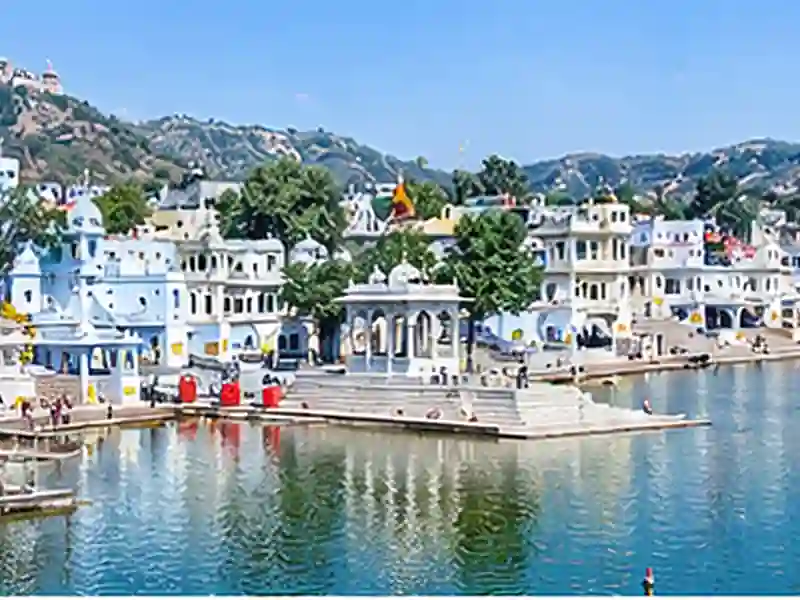
The beautiful Pushkar Lake is the most important natural and spiritual landmark in Pushkar.
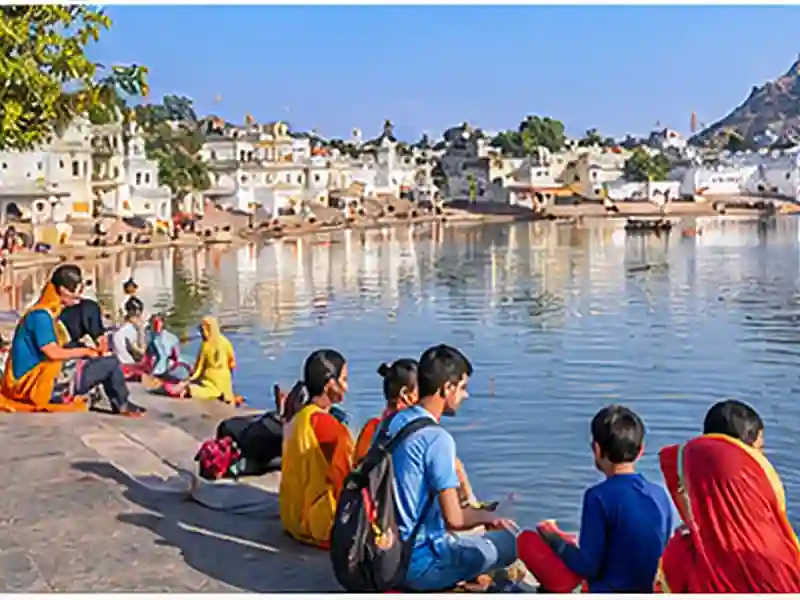
Surrounded by ancient temples, traditional buildings, and 52 bathing ghats, the lake forms the cultural and religious center of the town.
According to Hindu mythology, Pushkar Lake was created when a lotus flower fell from the hands of Lord Brahma.
The lake is traditionally known as Tirtha Raj, meaning the King of Pilgrimage Sites, and attracts devotees who visit to perform religious rituals and offer prayers.
The surrounding ghats provide beautiful views of the water, temples, and nearby hills.
During sunrise and sunset, the peaceful reflections and traditional religious activities create a memorable atmosphere for visitors.
Travelers can explore the ghats, observe devotional ceremonies, and enjoy peaceful moments while respecting local customs and photography restrictions.
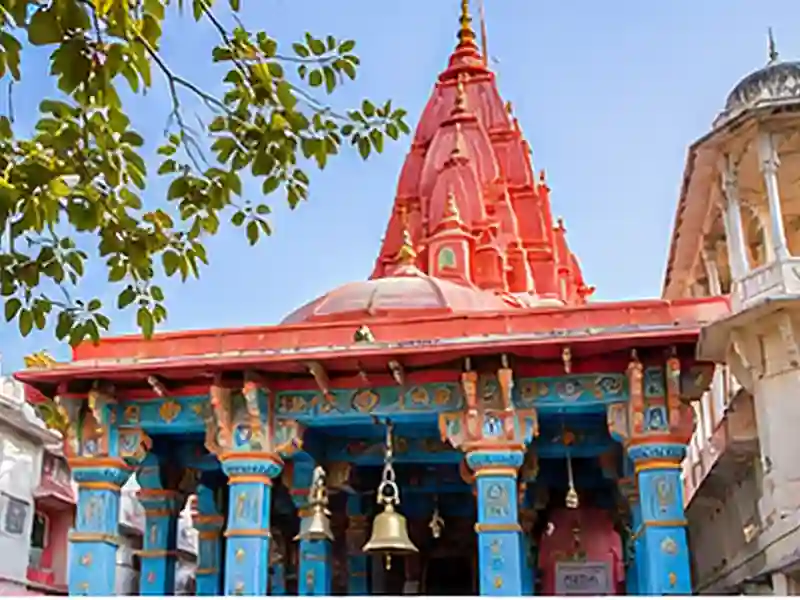
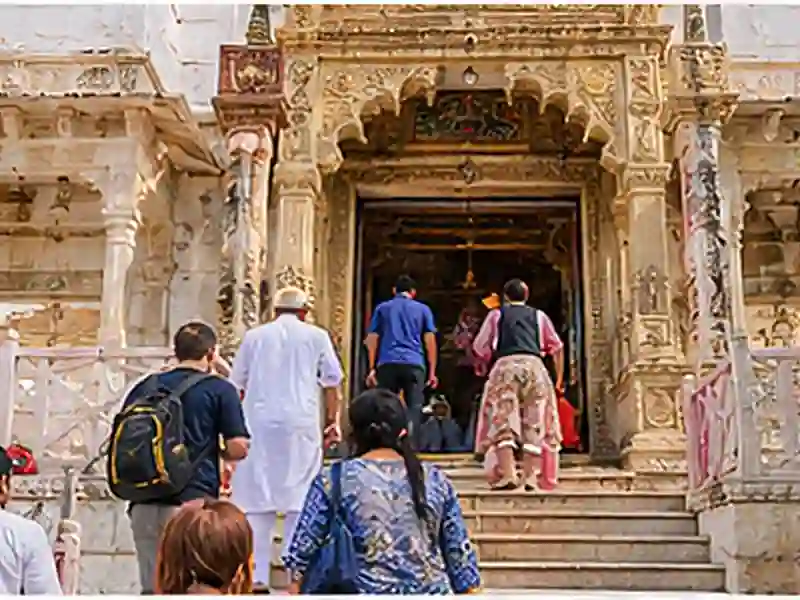
The magnificent Jagatpita Brahma Temple is Pushkar's most famous religious attraction and one of the best-known temples dedicated to Lord Brahma.
Located close to Pushkar Lake, the temple is recognized for its distinctive red spire, beautiful marble architecture, and traditional religious significance.
The shrine houses a four-faced representation of Lord Brahma, symbolizing the deity's association with creation.
The temple's present structure reflects centuries of religious and architectural history.
Pilgrims from across India visit the shrine to seek blessings and participate in traditional worship.
During Kartik Purnima and the Pushkar Fair period, the temple attracts especially large numbers of devotees.
Visitors should follow temple rules regarding footwear, photography, dress, and personal belongings.
Savitri Mata Temple is one of Pushkar's most beautiful spiritual and scenic attractions.
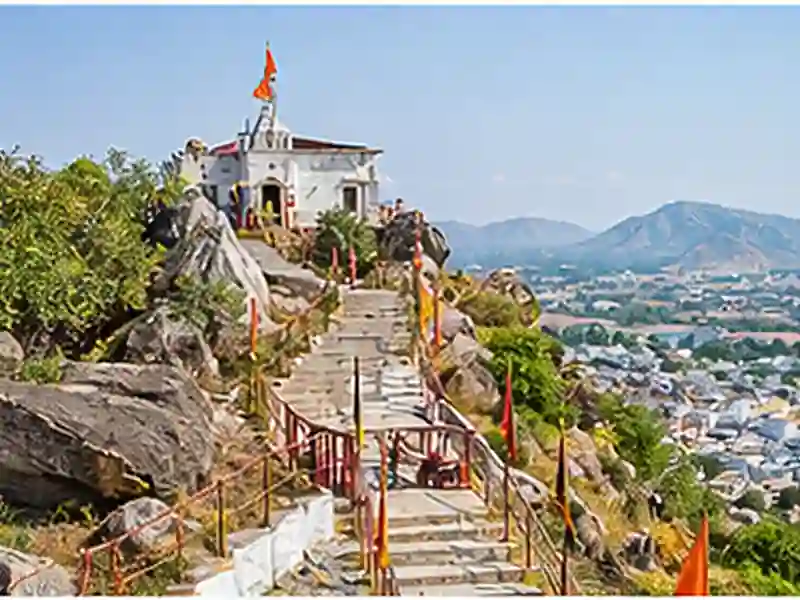
Situated on a hill overlooking the town, the temple is dedicated to Goddess Savitri, traditionally regarded as the consort of Lord Brahma.
The elevated location offers spectacular panoramic views of Pushkar Lake, surrounding temples, desert landscapes, and the Aravalli Hills.
Visitors can reach the temple by climbing the hillside steps or using the Savitri Mata Ropeway when operational.
The journey is particularly popular among photographers and travelers interested in scenic viewpoints.
Early morning and late afternoon visits offer beautiful natural light and comfortable sightseeing conditions during cooler months.
The temple combines religious significance with some of the most impressive views in the Pushkar region.
Pushkar is home to several beautiful temples that reflect the town's rich architectural and religious traditions.
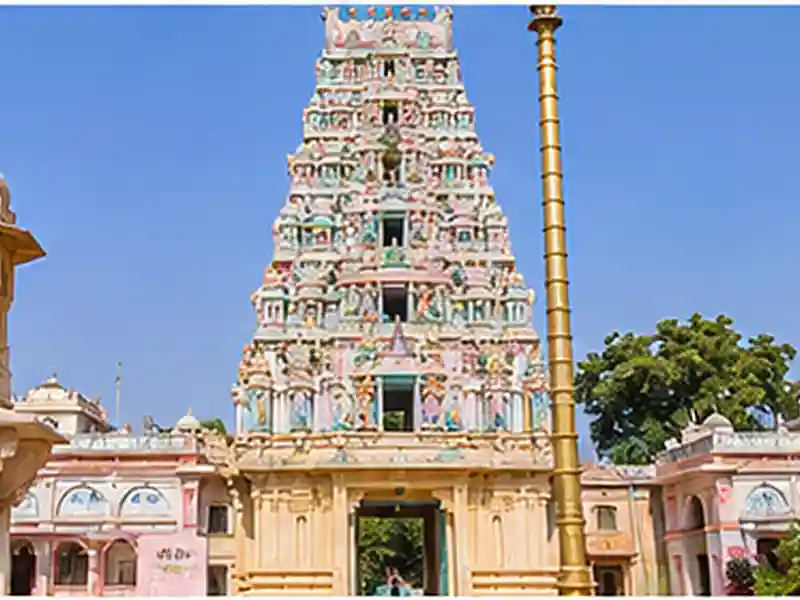
Rangji Temple is one of its most distinctive attractions, dedicated to Lord Rangji, a form of Lord Vishnu.
The temple is renowned for its unusual combination of South Indian, Rajput, and Mughal architectural influences.
Its impressive entrance tower, traditional courtyards, and religious structures make it a fascinating destination for architecture enthusiasts.
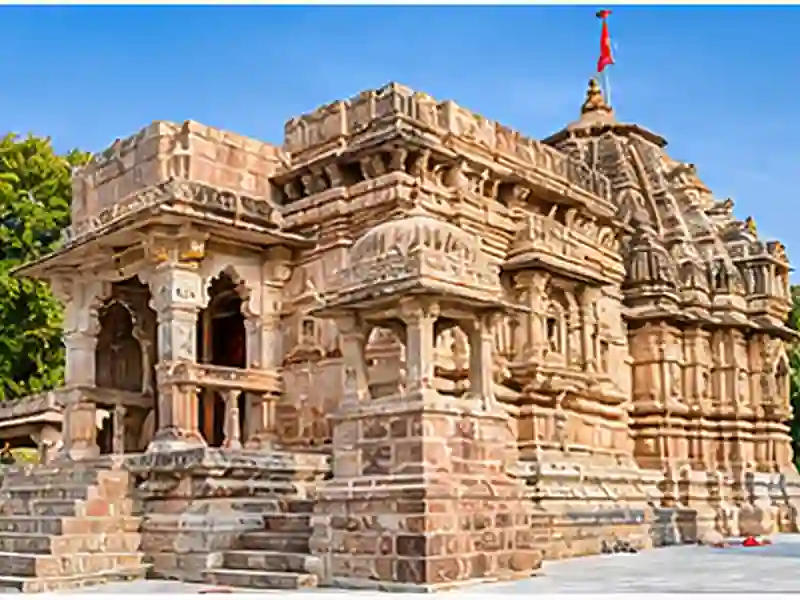
Other important religious landmarks include Varaha Temple, Atmateshwar Mahadev Temple, and Pap Mochini Temple.
These historic shrines provide opportunities to discover traditional craftsmanship, Hindu religious practices, and the cultural heritage of Pushkar.
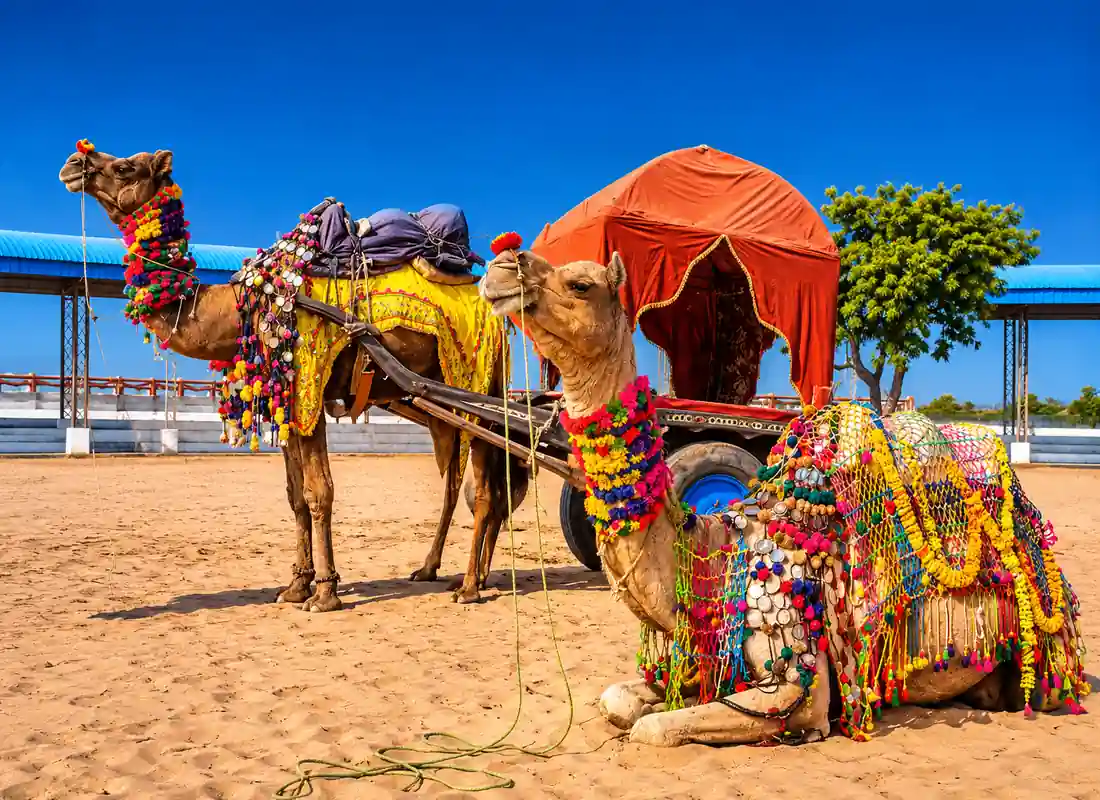
The annual Pushkar Camel Fair, also known as Pushkar Mela, is one of Rajasthan's most celebrated cultural events.
Traditionally held around the Hindu month of Kartik, usually in October or November, the fair attracts traders, pilgrims, tourists, and cultural performers.
The event is famous for its traditional livestock trading, especially camels and horses, along with colorful markets, regional handicrafts, and cultural activities.
Visitors can experience traditional Rajasthani clothing, folk music, dance performances, and local food.
The fair provides an opportunity to discover the agricultural, commercial, and cultural traditions of rural Rajasthan.
During this period, Pushkar becomes especially lively, and accommodation prices and visitor numbers can increase significantly.
Travelers should confirm the official dates and event program before planning their visit.
Pushkar is surrounded by beautiful semi-arid landscapes, sandy stretches, rural villages, and scenic hills.
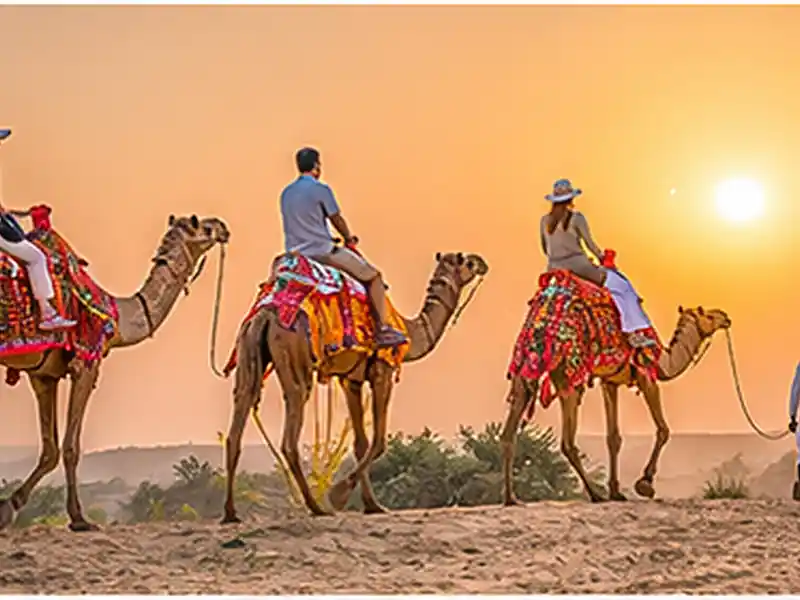
These surroundings provide opportunities for organized desert excursions and traditional camel safari experiences.
Visitors can explore designated countryside routes, admire picturesque sunset views, and discover the rural lifestyle of Rajasthan.
Camel safaris are among Pushkar's well-known tourism activities, although travelers should choose operators that follow responsible animal-welfare practices.
Jeep excursions may also be available through authorized local operators.
The changing colors of the desert landscape during sunset create beautiful photography opportunities.
These experiences offer a different perspective on Pushkar beyond its temples and sacred lake.
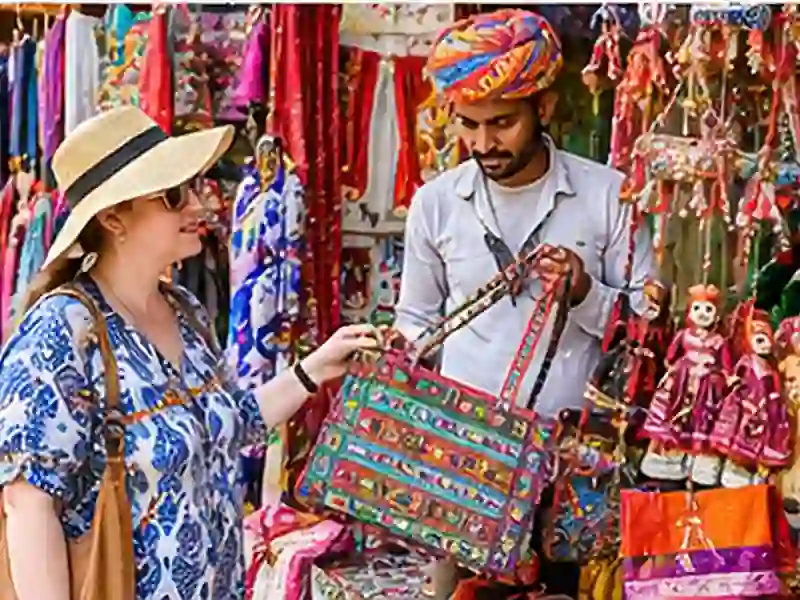
Pushkar is famous for its lively bazaars, colorful shopping streets, and traditional Rajasthani products.
Visitors can explore Pushkar Main Bazaar, Sadar Bazaar, and the shopping lanes near Brahma Temple.
The markets offer a wide selection of embroidered clothing, traditional jewelry, handicrafts, leather products, decorative items, and religious souvenirs.
Pushkar is also known for its rose cultivation and products such as rose water, perfumes, and gulkand.
Travelers can discover handmade textiles, traditional accessories, and local artwork while exploring the narrow streets.
The vibrant markets provide excellent opportunities to experience the town's distinctive cultural atmosphere.
Pushkar's beautiful natural surroundings are shaped by the ancient Aravalli Hills, which rise around the town.
The hills create a picturesque backdrop for Pushkar Lake, historic temples, and desert landscapes.
Nag Pahar, also known as Snake Mountain, forms a natural geographical boundary between Pushkar and Ajmer.
Travelers can enjoy scenic viewpoints, peaceful countryside walks, and beautiful sunrise or sunset photography.
The surrounding landscape becomes greener during the monsoon season, while winter provides comfortable conditions for outdoor exploration.
The combination of hills, temples, and desert scenery makes Pushkar especially appealing for photographers and nature lovers.
Pushkar offers a distinctive cultural atmosphere influenced by its religious traditions and the vibrant heritage of Rajasthan.
The town is known for its vegetarian food culture, traditional markets, folk performances, and colorful festivals.
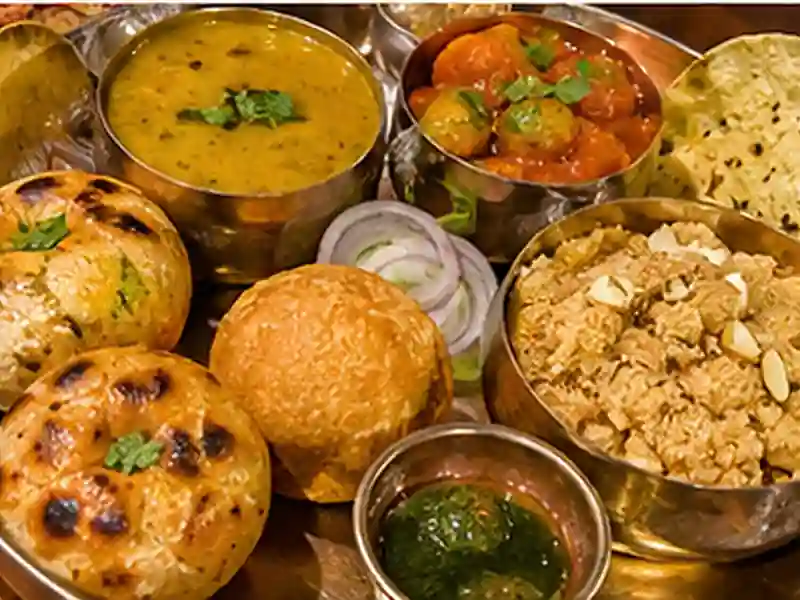
Popular local specialties include Dal Baati Churma, Kachori, Malpua, Rabri, Gatte Ki Sabzi, and traditional Rajasthani thalis.
Pushkar is particularly famous for its sweet Malpua, which is enjoyed by locals and visitors.
The town also offers numerous cafés and restaurants serving Indian and international cuisine.
Visitors can experience traditional hospitality, explore local markets, and enjoy the relaxed atmosphere of its historic streets.
Pushkar is much more than a sacred pilgrimage town. It is a destination where ancient temples, peaceful lakefront ghats, beautiful desert landscapes, colorful markets, and traditional Rajasthani culture come together.
From seeking blessings at Brahma Temple and exploring Pushkar Lake to enjoying panoramic views from Savitri Mata Temple, discovering traditional bazaars, and experiencing desert excursions, Pushkar offers memorable experiences for different kinds of travelers.
Whether you are planning a spiritual journey, a family holiday, a romantic getaway, or a cultural exploration of Rajasthan, visiting Pushkar provides an opportunity to discover one of India's most charming and culturally distinctive destinations.
Explore more beautiful destinations in Rajasthan.
Explore more Pushkar and Rajasthan travel experiences.


Plan a memorable getaway with Travel Ride.
Helpful answers about Pushkar.
The climate of Pushkar is regularly dry with the evenings being the coolest and days being most sweltering. The best and ideal opportunity to visit Pushkar is during November and March. The climate is quiet during these months.
The Tirtha Sthan Pushkar is celebrated for the Pushkar reason that uncovers the genuine soul of India where not just the merriments and strict ceremonies happen but additionally exchanging exercises for a huge scope happen. A reasonable time is a top time at Pushkar and the spot blasts at it appear during the celebrations. Consequently the reasonable is known for strict confidence as well as has business undertones making it livelier than at any other time.
Pushkar doesn't have an air terminal yet the closest air terminal to Pushkar is in Jaipur, It requires 3 hours from the air terminal to Pushkar city. One passing via train should take a train to Ajmer and afterward need to require a 30-minute drive to Pushkar. Some standard trains that suddenly spike in demand for this course are Ajmer Shatabdi and Ajmer Rajdhani. Different trains are likewise there chetak express, Ali sdah express, Aravali Express, and Bsb express.
Pushkar is available from Ajmer solely after the intersection "Bother Pahar" which frames a characteristic line between Pushkar and Ajmer. A portion of the primary attractions of Pushkar are Brahma Temple, Pushkar Lake, Gayatri Mata Temple, Gurudwara Singh Sabha, Varaha sanctuary, Savitri sanctuary, Rangji sanctuary, Pap mochini sanctuary, Shri Panchkund shiva sanctuary, Apteshwar sanctuary, Man Mahal, and so on.
It is otherwise called Kartik Mela, quite possibly the most magnificent camel celebration in the country. It is an 8-day long held in November every year. It is coordinated to advance nearby camel and dairy cattle dealers to work together during blessed Kartik Purnima. The fair holds different shops including Rajasthani crafted works, craftsmanship, and culture. Exercises that make the reasonable more outlandish incorporate sorcery shows, snake charmers, manikin shows, camel marches, and custodians.
Pushkar Bazaar is one of the top tourist destinations in Pushkar. It is famous for rose pulp. One can find handicraft items at a reasonable price. Rajasthani costumes are also available including leather bags made of camel skin, utensils made of brass, and glassware.
 Why Visit Rajasthan With Family
 The Vibrant Desert Festival of Jaisalmer
 Pushkar Mela -The Reflection of Rajasthani Culture
 27 Famous National Parks in India
 Have a dip in the Royal past of Rajasthan with these Magnificent Forts.