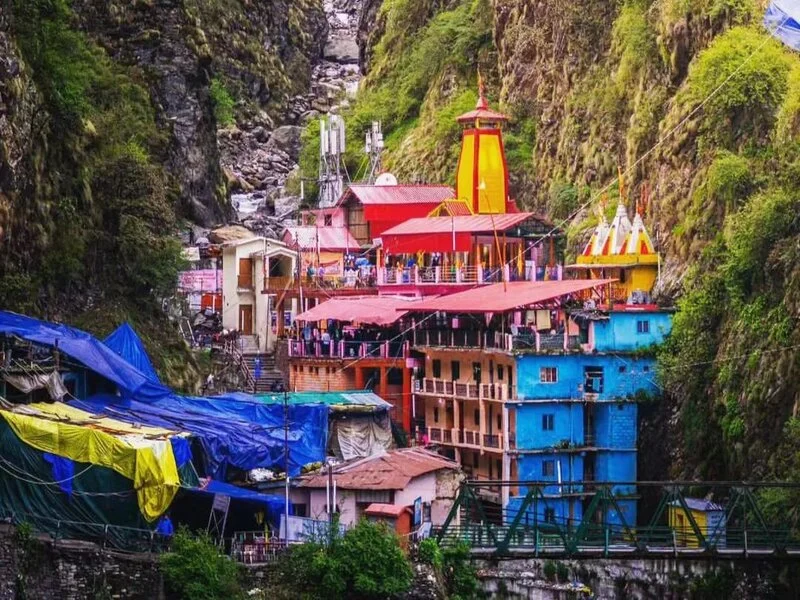
The Yamunotri Dham Yatra holds a special place in the hearts of millions of devotees who begin their Chardham journey from this sacred shrine. Located in the serene Garhwal Himalayas of Uttarkashi district, Yamunotri is the origin of the holy River Yamuna, worshipped as a divine mother who blesses devotees with purity, strength, and protection. From narrow mountain pathways to beautiful forest trails and hot springs, the entire route to Yamunotri offers a blend of spirituality, adventure, and natural beauty.
1. Introduction to Yamunotri Dham
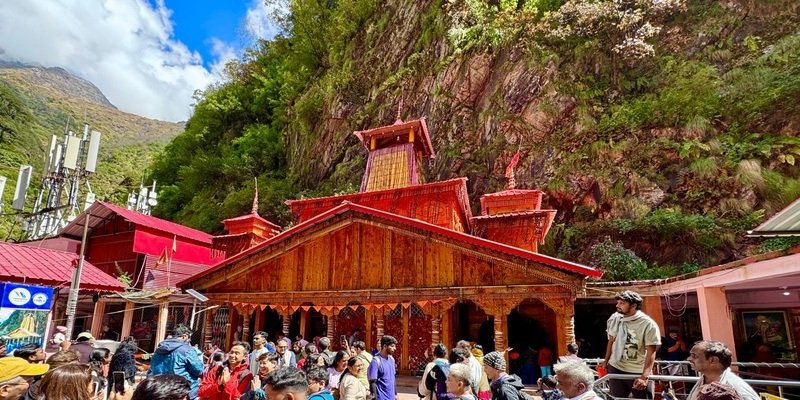
Yamunotri is the first stop of the sacred Chardham Yatra, followed by Gangotri, Kedarnath, and Badrinath. Situated at an altitude of 3,293 meters, this revered shrine is dedicated to the Goddess Yamuna. The temple holds deep mythological and historical significance, and the trek leading to the dham is known for its scenic valleys, dense forests, and the soothing sound of the Yamuna River.
For pilgrims seeking a spiritual experience wrapped in Himalayan charm, Yamunotri offers a perfect blend of devotion and adventure. Many travelers rely on leading travel operators like Travel Ride for seamless arrangements, comfortable accommodation, and reliable guidance throughout the Yatra.
To see how Yamunotri fits into the broader pilgrimage, the Chardham Yatra guide explains the sequence, significance, and connections between all four dhams.
2. Mythological Significance of Yamunotri
Yamunotri is not just a pilgrimage destination; it is a symbol of purity and the eternal flow of life. According to ancient Hindu scriptures:
-
Divine Origin of the River Yamuna
River Yamuna is believed to be the daughter of Lord Surya and the sister of Yamraj, the God of Death. Legends say that bathing in the river protects devotees from untimely death and brings peace, longevity, and spiritual purification.
Asit Muni, a revered sage in Hindu mythology, lived his life meditating in the Yamunotri region. He used to bathe in both the Yamuna and the Ganga every day. In his old age, when he couldn’t travel to the Ganges, a stream from the Ganga is believed to have appeared in Yamunotri to bless him.
-
Thermal Springs and Goddess Energy
The hot springs of Yamunotri, especially Surya Kund, are believed to carry divine healing energy. Pilgrims cook rice and potatoes tied in cloth in these springs as prasad, symbolising purity and divine blessings.
3. Best Time to Visit Yamunotri Dham
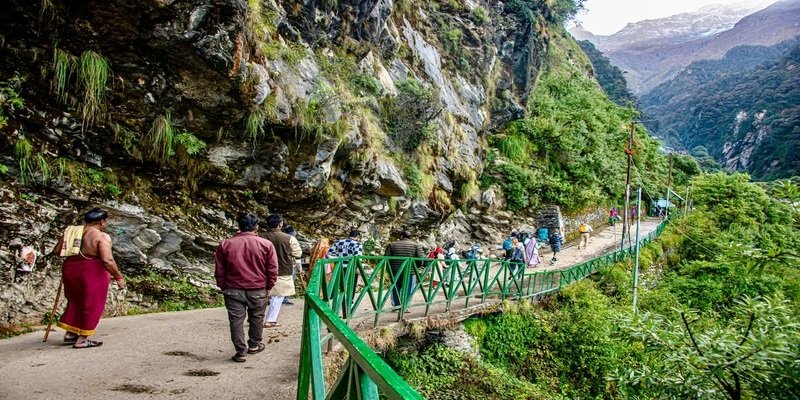
The best time to visit Yamunotri is from May to June and again from September to mid-October, when the weather is pleasant and safe for travel. Summer brings clear skies, comfortable temperatures, and ideal conditions for the 5–6 km trek from Janki Chatti. After the monsoon, the autumn season offers fresh mountain air, scenic landscapes, and fewer crowds, making the journey peaceful.
Avoid the monsoon months of July and August, as the region experiences heavy rainfall and landslides. Winter should also be avoided because the Yamunotri Temple remains closed due to heavy snowfall and extreme cold.
The Yamunotri Temple opens in May on Akshay Tritiya and closes around Diwali in October/November. The ideal season to plan your Yatra is:
Summer (May to June)
Post-Monsoon (September to mid-October)
Avoid the monsoon months (July–August) as the region experiences landslides, roadblocks, and heavy rainfall.
Pilgrims planning the full yatra often refer to the Char Dham Best Time section to understand when travelling across all dhams is ideal.
4. How to Reach Yamunotri
Reaching Yamunotri Dham involves a scenic combination of road travel and trekking. The journey begins with a drive to Janki Chatti, the last motorable point near the shrine. Visitors can reach Janki Chatti from Haridwar, Rishikesh, Dehradun, or Mussoorie by bus, cab, or private vehicle.
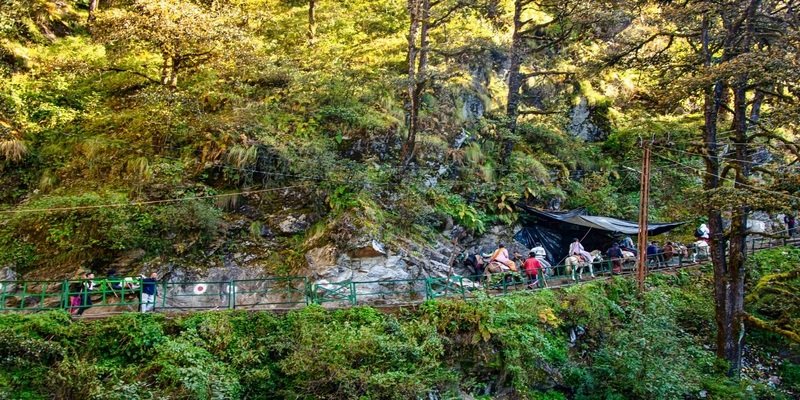
The nearest airport is Jolly Grant Airport in Dehradun, while the closest major railway stations are Rishikesh and Dehradun. From Janki Chatti, pilgrims must trek about 5–6 km to reach the Yamunotri Temple. This route is well-marked, and ponies, palkis, and pitthus are available for those who need assistance.
Reaching Yamunotri involves a combination of road travel and a scenic trek.
By Air
-
Nearest Airport: Jolly Grant Airport, Dehradun (approx. 200 km from Janki Chatti)
-
Taxis and buses are available to reach Barkot and Janki Chatti.
By Rail
-
Nearest major railway stations: Dehradun and Rishikesh
-
From here, travellers can take buses, shared taxis, or private vehicles.
By Road
Yamunotri is well-connected to:
-
Rishikesh
-
Dehradun
-
Haridwar
-
Mussoorie
-
Uttarkashi
The road journey ends at Janki Chatti, from where the trek begins.
Travel Ride often arranges comfortable transport services for Yamunotri pilgrims, ensuring a smooth journey through the mountains.
5. Trek to Yamunotri Temple
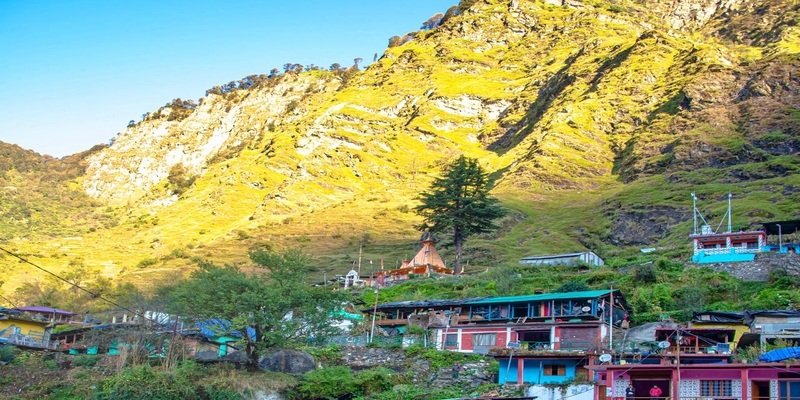
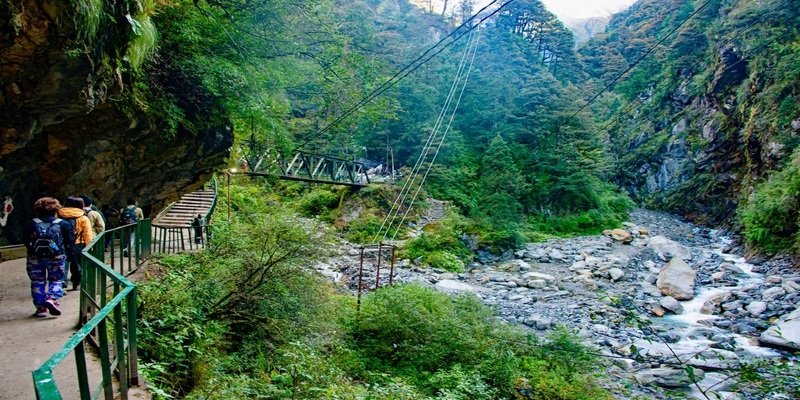
The trek to Yamunotri Temple begins from Janki Chatti and covers a beautiful 5–6 km path through the Garhwal Himalayas. The trail is well-paved and offers stunning views of waterfalls, forests, and the flowing Yamuna River.
Though the route involves steep climbs in some sections, it is manageable for most pilgrims with short breaks. Along the way, tea stalls and resting points provide comfort. Those who cannot walk can hire ponies, palkis, or pitthus for assistance. The refreshing mountain air and scenic landscapes make the trek a memorable part of the Yamunotri Dham Yatra.
The trek from Janki Chatti to Yamunotri is around 5–6 km and takes approximately 3–4 hours depending on fitness levels.
Trek Highlights
Options for Pilgrims
-
Pilgrims can trek on foot or choose among:
-
Palki/Doli
-
Pony
-
Kandi
-
Helicopter (to nearby helipads, not directly to Yamunotri)
From the Yamunotri trek, pilgrims move onward to Kedarnath, and the Kedarnath guide explains the route, temple, and surrounding landscape.
6. Route and Road Conditions to Yamunotri
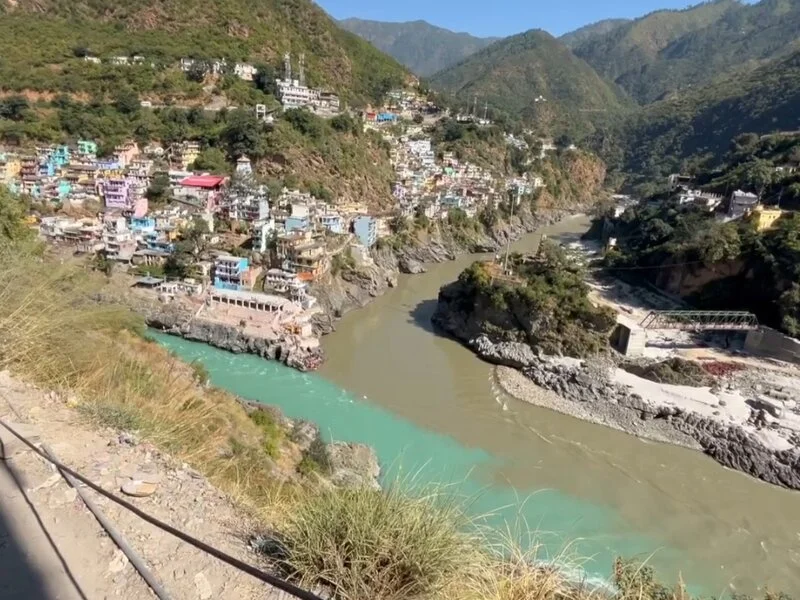
The route to Yamunotri Dham passes through some of the most scenic Himalayan roads. Most travellers start their journey from Haridwar, Rishikesh, or Dehradun and travel through Mussoorie, Barkot, and Hanuman Chatti before reaching Janki Chatti, the last motorable point.
The roads are generally well-maintained, but some stretches become narrow and winding as you move deeper into the mountains. During summer, travel is smooth and safe, while monsoon months may bring landslides and temporary road closures. Drivers should stay cautious on sharp bends and follow local traffic guidelines. Overall, the journey offers beautiful valley and river views.
The road journey leading to Janki Chatti has both smooth and challenging stretches.
Key Route
Haridwar/Rishikesh → Dehradun → Mussoorie → Barkot → Janki Chatti → Yamunotri Trek
Road Conditions
-
Mostly well-maintained highways
-
Narrow mountain bends
-
Occasional landslide-prone areas
-
Beautiful river and valley views
Summer routes are safer, while monsoon requires extra caution.
7. Hot Springs of Yamunotri
The hot springs of Yamunotri are among the most sacred attractions of the Dham. The most famous spring, Surya Kund, has naturally boiling water where devotees cook rice and potatoes tied in a cloth to offer as prasad. Nearby, Gauri Kund provides warm water for ritual bathing before visiting the temple. These geothermal springs are believed to carry divine healing energy, offering warmth and comfort in the cold Himalayan climate while adding a spiritual charm to the pilgrimage.
Surya Kund: A natural hot water spring with water temperatures up to 90°C. Pilgrims cook rice and potatoes tied in a cloth as prasad.
Gauri Kund: Another sacred kund where devotees take a holy dip before heading to the temple.
These thermal springs are believed to have healing properties and add to the spiritual charm of the region.
8. Yamunotri Temple – Architecture and Rituals
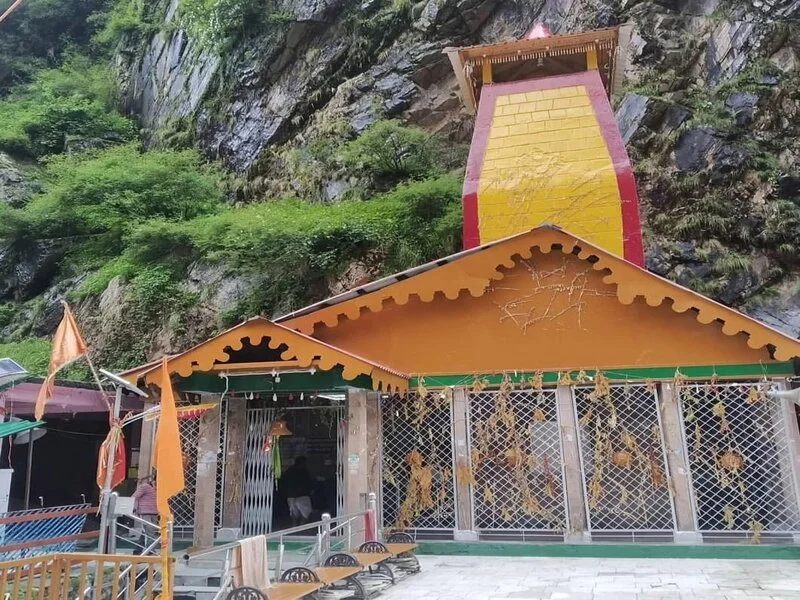
Yamunotri Temple features traditional Himalayan architecture, built with stone and wooden elements that blend beautifully with the surrounding mountains. Its bright yellow and red tones give the shrine a divine presence amid the rugged landscape. Inside the temple, the idol of Goddess Yamuna is worshipped with deep devotion.
Daily rituals include morning and evening aarti, offering of prasad cooked in Surya Kund, and chanting of sacred mantras. Pilgrims also perform rituals at nearby kunds before entering the shrine. The simple yet spiritual atmosphere makes every visit to Yamunotri Temple peaceful and memorable.
Architectural Beauty
The temple is built in traditional Himalayan style with red and yellow hues. It stands gracefully near the gushing Yamuna River surrounded by snow-clad peaks.
Daily Rituals
The peaceful atmosphere and divine chants create a spiritual experience that stays with pilgrims forever.
9. Accommodation Options at Yamunotri
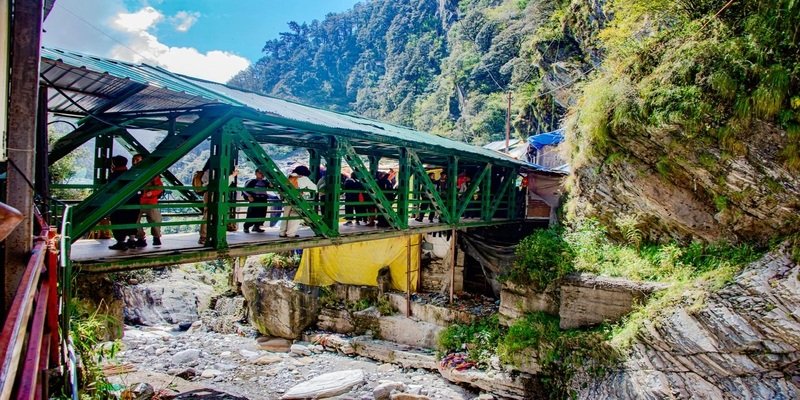
Accommodation options at Yamunotri are simple, comfortable, and designed to support pilgrims visiting the sacred dham. Most stays are available at Janki Chatti, located around 5 km from the temple. Here, travellers will find budget guesthouses, government lodges, GMVN rest houses, and small hotels offering basic rooms with clean bedding and essential facilities.
Many properties provide home-style food and hot water on request, making the stay convenient for devotees. Though luxury stays are limited, the peaceful environment, mountain views, and warm local hospitality make Janki Chatti a reliable base for the Yamunotri Yatra.
Since the temple is located in a high-altitude region, accommodation options are primarily available at:
-
Budget guesthouses
-
Basic lodges
-
Neat rooms with essential facilities
-
Hotels
-
Deluxe stays
-
Family-friendly accommodation
Travel operators like Travel Ride ensure comfortable stays that suit all budgets and preferences.
Pilgrims planning their route after Yamunotri can look at the Gangotri Dham guide to arrange their stay in advance.
10. Important Places to Visit Near Yamunotri
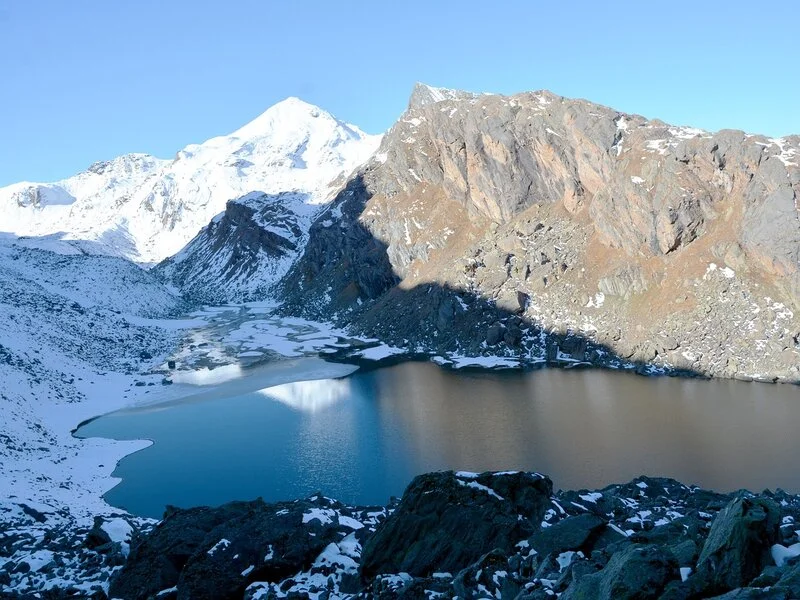
Several beautiful and spiritually rich places surround Yamunotri, making the journey even more rewarding. Hanuman Chatti is a peaceful halt known for its serene riverside views and trekking routes. Janki Chatti, the base point for the Yamunotri trek, offers hot springs and scenic mountain landscapes. Kharsali Village, believed to be the winter seat of Goddess Yamuna, is famous for its ancient wooden Shani Temple. Saptrishi Kund, though challenging to reach, attracts adventure lovers with its crystal-blue glacier lake. Together, these nearby attractions add natural beauty and cultural depth to the Yamunotri Dham experience.
Besides the temple, pilgrims can explore several nearby attractions:
-
Hanuman Chatti: A calm riverside village and the junction for multiple treks.
-
Kharsali Village: Believed to be the winter home of Goddess Yamuna.
-
Yamunotri Glacier (Champasar Glacier): The actual source of the Yamuna, reachable through a tough trek.
-
Janki Chatti Hot Springs: Natural sulphur springs ideal for relaxation and rejuvenation.
-
Barkot: A peaceful town with beautiful views of Bandarpoonch Peak.
11. Weather Conditions at Yamunotri
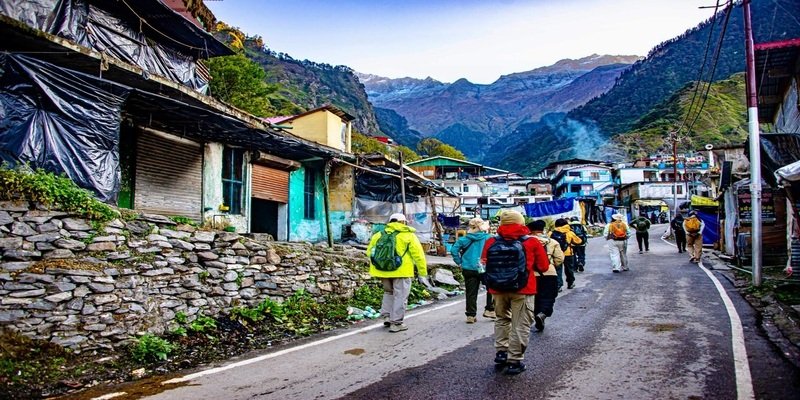
The weather at Yamunotri remains cold for most of the year due to its high Himalayan altitude. The summer season from May to June brings pleasant temperatures, usually ranging between 10°C to 20°C, making it ideal for the Yamunotri Yatra. Monsoon from July to September often brings heavy rainfall, landslides, and slippery trekking paths, so travellers must stay cautious.
Winter starts early, and from October onwards, the region experiences extreme cold and heavy snowfall, leading to temple closure. Carrying warm clothes, rain protection, and proper footwear is essential for a safe and comfortable Yamunotri visit.
Summer (May–June)
-
Pleasant temperatures
-
Best time for pilgrimage
Monsoon (July–August)
-
Heavy rains
-
Landslide-prone zones
-
Travel not advisable
Autumn (September–October)
-
Clear skies
-
Ideal for trekking
Winter (November–April)
-
Extreme cold
-
Heavy snowfall
-
Temple remains closed
After planning your visit to Yamunotri, you can refer to the Badrinath travel guide to understand the ideal months for the final dham.
12. Registration Process for Yamunotri
The registration process for Yamunotri Dham is simple and ensures a safe pilgrimage experience. Every traveller must complete mandatory registration through the official Uttarakhand Tourism portal or at authorised physical counters along the route.
The process requires basic details such as name, ID proof, travel dates, and mobile number. After successful registration, a Yatra permit or QR code is issued, which must be carried throughout the journey. This system helps the authorities track pilgrims and provide timely assistance during emergencies. Registering in advance is recommended to avoid last-minute delays and ensure a smooth Yamunotri Yatra experience.
The Uttarakhand Government has made Yatra registration mandatory.
How to Register
Offline Registration
Available at:
-
Haridwar
-
Rishikesh
-
Dehradun
-
Barkot
QR-Scan System
13. Safety Tips for Yamunotri Yatra
Pilgrims visiting Yamunotri should take necessary precautions due to its high-altitude location and rugged terrain. Always check weather updates before starting your journey, as sudden rain or snow can make roads slippery.
Wear warm clothing, sturdy trekking shoes, and carry rain gear. Stay hydrated and avoid overexertion during the 5–6 km trek from Janki Chatti. Keep essential medicines for cold, altitude sickness, and fatigue. Travel in groups or with experienced guides, and follow local rules and instructions. Avoid trekking during monsoon months, and use pony or palki services if needed for a safer and comfortable pilgrimage.
Essential Precautions
Medical Tips
Guided tours by reputable operators like Travel Ride ensure safe and hassle-free travel.
14. Food and Prasad at Yamunotri
Yamunotri Temple offers devotees a simple yet spiritual food experience. The most famous prasad is prepared in the natural hot springs, Surya Kund, where rice and potatoes are cooked in boiling water as an offering to the Goddess Yamuna. Pilgrims often partake in this sacred prasad as a blessing.
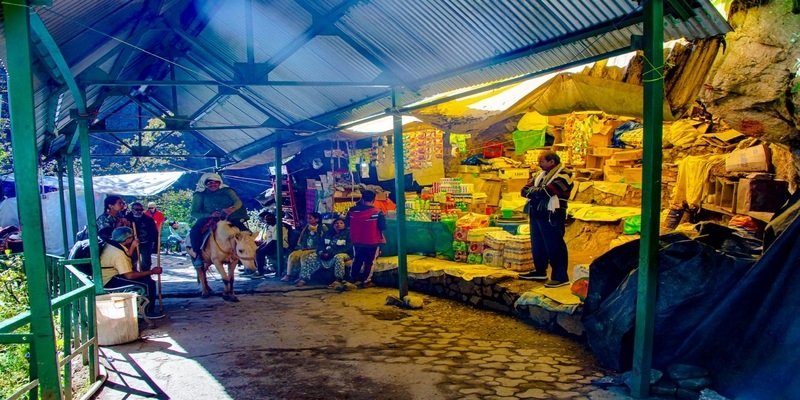
Along the trekking route from Janki Chatti, small tea stalls and dhabas provide light vegetarian meals, snacks, and hot beverages. Fresh, home-style food is available at nearby guesthouses and lodges. Eating simple and light meals is recommended due to high-altitude conditions, making the journey comfortable and spiritually fulfilling.
Prasad from Surya Kund
Devotees cook:
as sacred offerings to Goddess Yamuna.
Available Food Options
-
Simple vegetarian meals
-
Tea stalls
-
Local snacks
Food is basic due to the remote location, but fresh and served with devotion.
15. Travel Tips for Yamunotri Yatra
Planning a safe and enjoyable Yamunotri Yatra requires proper preparation. Always check weather conditions before starting, as sudden rain or snowfall can affect roads and trekking paths. Carry warm clothing, sturdy trekking shoes, rain gear, and gloves, as temperatures remain low even during summer.
Hydrate regularly and take short breaks while trekking the 5–6 km trail from Janki Chatti. Keep essential medicines for cold, altitude sickness, and fatigue. Travel in groups or with experienced guides for safety. Cash is advisable as ATMs are limited near Yamunotri. Respect local customs, follow temple rules, and avoid littering to preserve the sacred environment.
For convenience and a hassle-free journey, many pilgrims rely on trusted operators like Travel Ride, who provide transport, accommodation, and guidance throughout the Yatra. Following these tips ensures a smooth, safe, and spiritually rewarding experience.
Important Tips
-
Check the weather and road conditions
-
Start early for the trek
-
Carry cash (limited ATM availability)
-
Keep photocopies of ID proofs
-
Follow local guidelines
-
Avoid travelling during the monsoon
Trekking Tips
-
Don’t rush
-
Follow marked trails
-
Keep water and ORS handy
Why Choose Travel Ride for Yamunotri Yatra?
Their attention to detail ensures that every pilgrim enjoys a safe, peaceful, and memorable spiritual journey.
Conclusion
The Yamunotri Dham Yatra is not just a trip; it is a transformative Himalayan experience filled with devotion, natural beauty, and cultural richness. From trekking along scenic mountain paths to witnessing the divine aura of the Yamunotri Temple, every moment of the journey brings spiritual upliftment.
With proper planning, awareness of the route, comfortable accommodation, and reliable travel partners like Travel Ride, your Yamunotri Yatra becomes safe, smooth, and unforgettable. Whether you’re a devotee, an adventurer, or a nature lover, the sacred land of Yamunotri will leave you inspired and blessed.